Province Wise Tourism
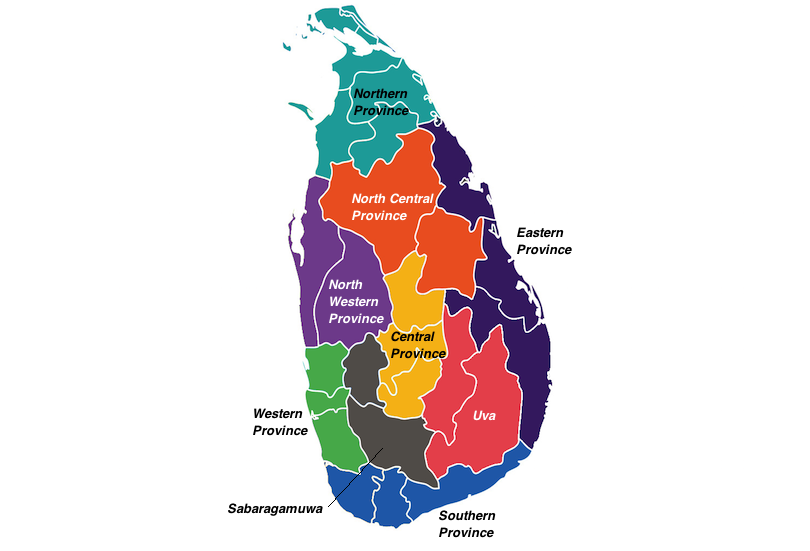
In Sri Lanka, provinces (Sinhala: පළාත, romanized: Paḷāta; Tamil: மாகாணம், romanized: Mākāṇam) are the first level administrative division. They were first established by the British rulers of Ceylon in 1833. Over the next century most of the administrative functions were transferred to the districts, the second level administrative division. By the middle of the 20th century the provinces had become merely ceremonial. This changed in 1987 when, following several decades of increasing demand for a decentralization, the 13th Amendment to the 1978 Constitution of Sri Lanka established provincial councils. Currently there are nine provinces.
The number of provinces remained static until September 1988 when, in accordance with the Indo-Lanka Accord, President Jayewardene issued proclamations enabling the Northern and Eastern provinces to be one administrative unit administered by one elected Council, creating the North Eastern Province. The proclamations were only meant to be a temporary measure until a referendum was held in the Eastern Province on a permanent merger between the two provinces. However, the referendum was never held and successive Sri Lankan presidents issued proclamations annually extending the life of the "temporary" entity. The merger was bitterly opposed by Sri Lankan nationalists. On 14 July 2006, after a long campaign against the merger, the JVP filed three separate petitions with the Supreme Court of Sri Lanka requesting a separate Provincial Council for the East. On 16 October 2006 the Supreme Court ruled that the proclamations issued by President Jayewardene were null and void and had no legal effect. The North-East Province was formally de-merged into the Northern and Eastern provinces on 1 January 2007.
Sri Lanka currently has nine provinces, seven of which have had provincial councils from the start.